Dating a squash blossom necklace takes more than identifying its crescent-shaped naja pendant or the blossoms along the chain. We look at the necklace as a whole: how its silver was made, how its stones were set, whether it has a maker’s mark, and what is known about its history. No single feature provides a reliable date on its own.
Examine the backs of the blossoms, the naja, and the stone settings. Hand-cut details, individually made beads, and small variations between matching pieces can be useful clues to construction. Cast components, uniform stamped parts, and machine-made beads may point to different production methods, but they do not automatically make a necklace recent. Makers have used a range of techniques over time, and older components can appear in later necklaces.
The clasp and stringing also deserve attention. A necklace may have been restrung or fitted with a new clasp during its lifetime, so our team treats those parts as supporting clues rather than proof of the age of the entire piece.
Turquoise color alone cannot date a necklace. Natural variation, treatment, wear, and differences between stones can all affect its appearance. Look instead at the shape of the settings and whether the stones and silverwork appear consistent throughout the piece.
A hallmark or a “sterling” stamp can help narrow a date when the mark is identifiable, but an unmarked necklace is not necessarily older. Marks may be absent, worn, or added to a piece made with earlier components. If a date matters for a purchase or insurance record, ask a qualified appraiser with experience in Native American jewelry to examine the necklace in person.
Receipts, family records, and documented ownership can establish a more dependable timeline than patina alone. Request any available history, and note repairs or replacement stones. We also recommend describing a necklace as Navajo-made only when its maker or origin is supported; the squash blossom form has been interpreted by many makers.
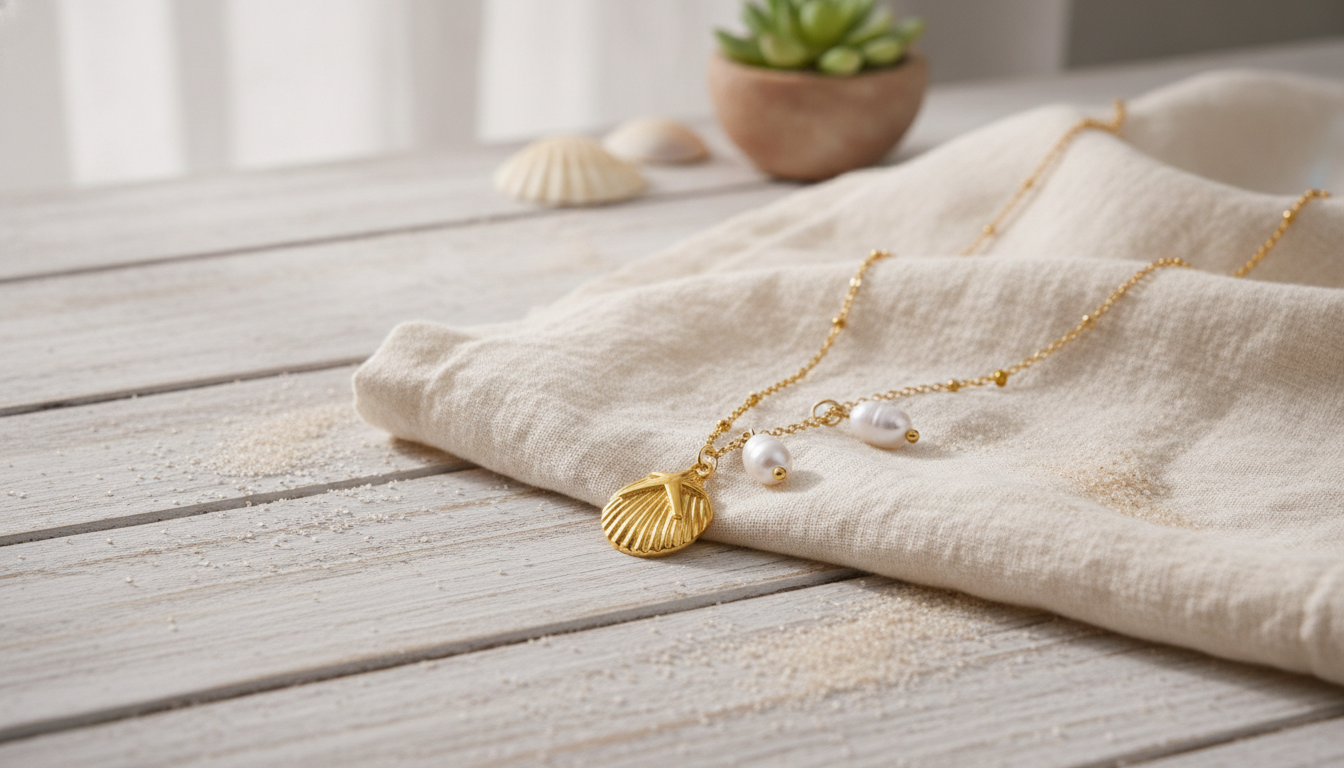
If you are choosing jewelry for its look rather than establishing an age, consider how its scale and materials work with your wardrobe. For a lighter, seaside-inspired option, explore our guide to shell, starfish, and pearl necklaces.
No. Silver can tarnish relatively quickly, and its surface can also be polished. Tarnish is most useful when considered alongside construction, marks, and documented history.










Leave a comment