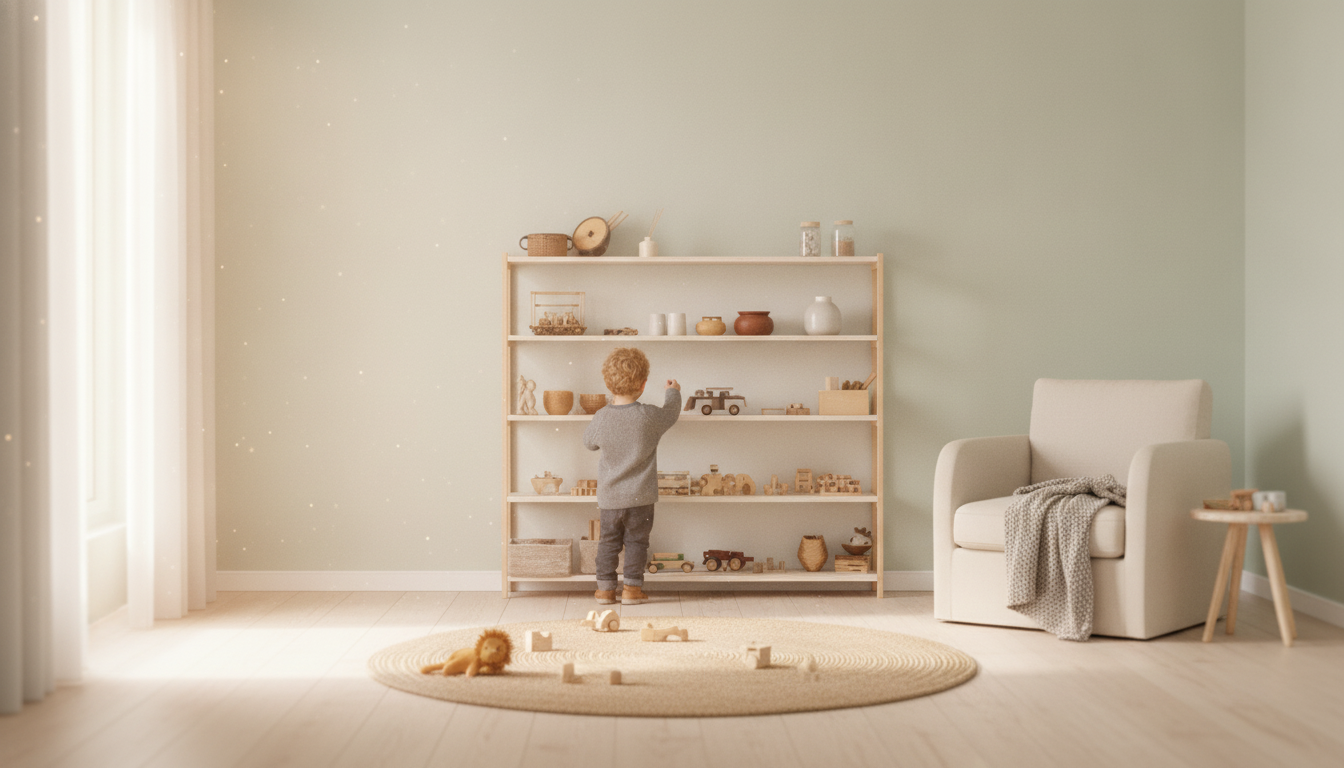
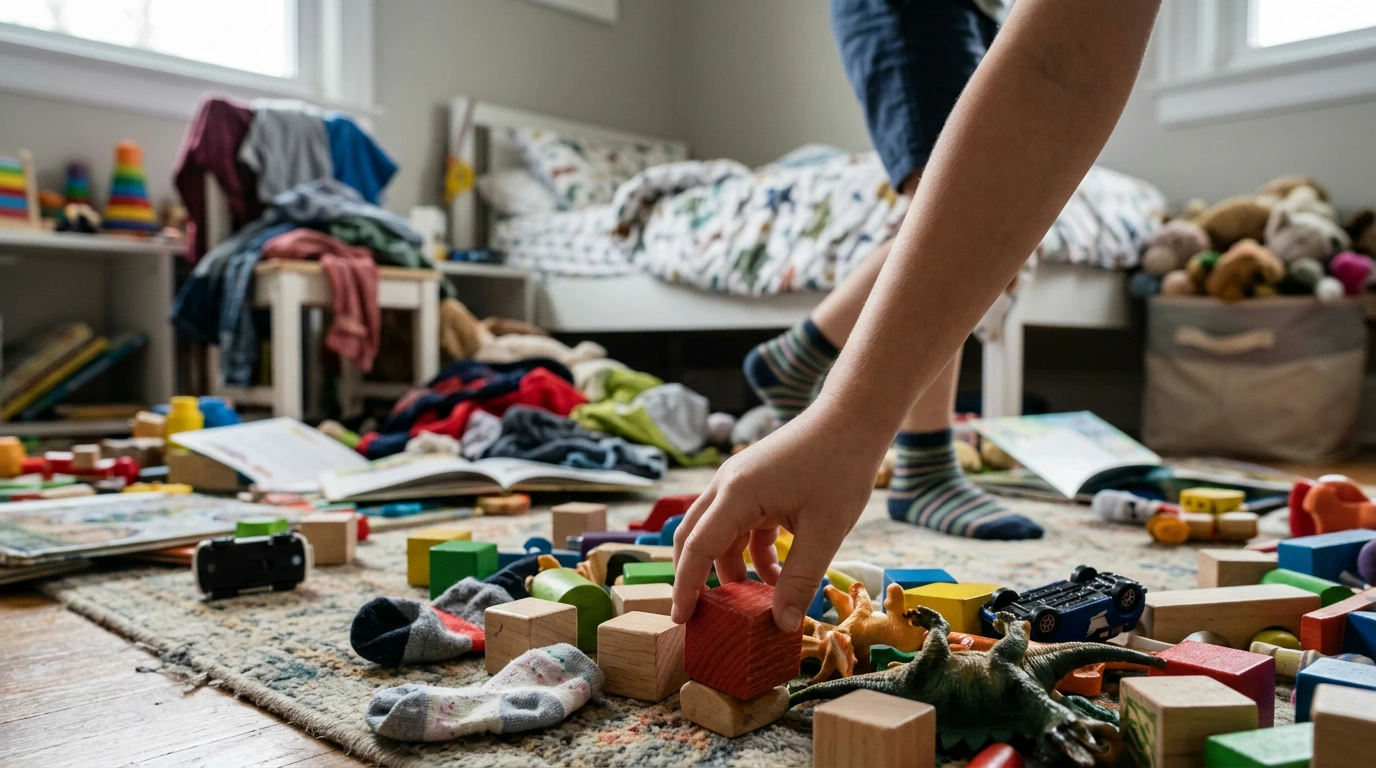
A child’s room can swing from “mostly fine” to overwhelming in a matter of days—new toys, school papers, mystery craft bits, and clothes that somehow shrink overnight. The good news: decluttering doesn’t have to be an all-day, tears-and-tantrums project. A short, repeatable routine helps the whole family reset the space, without dumping every bin onto the floor.
Use the plan below to break the work into small wins, give kids clear jobs that match their age, and end with simple storage habits that keep the room livable.
Routines and predictable steps help many kids stay calmer and more cooperative during transitions and chores. For additional parenting guidance on structure, visit HealthyChildren.org (American Academy of Pediatrics).
This sequence prevents the classic “everything is everywhere” spiral. You’ll create space first, then make decisions with less stress.
| Category | Keep When… | Let Go When… |
|---|---|---|
| Toys | Played with in the last month (or rotated in), complete set, child still likes it | Broken, missing key pieces, repeatedly ignored, duplicates |
| Books | Read often, appropriate level, sentimental favorites | Outgrown, disliked, damaged beyond repair, easy to borrow from library |
| Clothes | Fits now, comfortable, season-appropriate, worn weekly | Too small, itchy/unworn, stained/torn, multiples beyond what’s used |
| Art & School Papers | Shows growth, favorite pieces, awards, a few meaningful memories | Worksheets, random notes, excessive duplicates, unclear significance |
| Stuffed Animals | Top favorites, used for sleep/comfort, washable | Overflowing volume, never chosen, dusty or damaged |
For donation guidelines (including what many locations can and can’t accept), check the Goodwill Donation Guide.
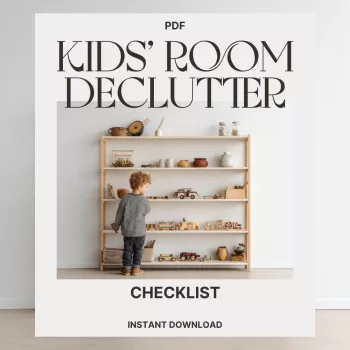
If you want a ready-to-go version, the Kids’ Room Declutter Checklist printable digital download lays out the steps in a simple sequence you can repeat for quick resets or seasonal cleanouts.
When the goal is a calmer environment and fewer daily blowups, small routines can help support kids’ mental well-being. For research-backed information and resources, see the CDC’s Children’s Mental Health page.
If pets share family spaces, a simple surface routine can prevent fur and “paw print clutter” from spreading into kids’ rooms. The digital guide From Paw Prints to Perfection | The Ultimate Guide on How to Maintain Tidy Surfaces with Pets is a helpful companion for busy households managing both toys and pet mess.
Work in short sessions and go zone by zone. Start with trash and laundry, then sort floor items into Keep/Donate/Trash/Relocate, and tackle one bin or drawer at a time before finishing with a visible win like a clear desk.
Toddlers can help with simple categories when an adult directs the process. Many kids ages 5–7 can follow a short checklist, while older kids can handle closet edits and regular maintenance when expectations match their attention span.
Keep daily-use storage at child height, use open bins for easy categories, and set up clear zones for sleep, play, and learning. Minimize flat surfaces that attract piles and add a hamper plus a small catch-all basket for quick resets.









Leave a comment