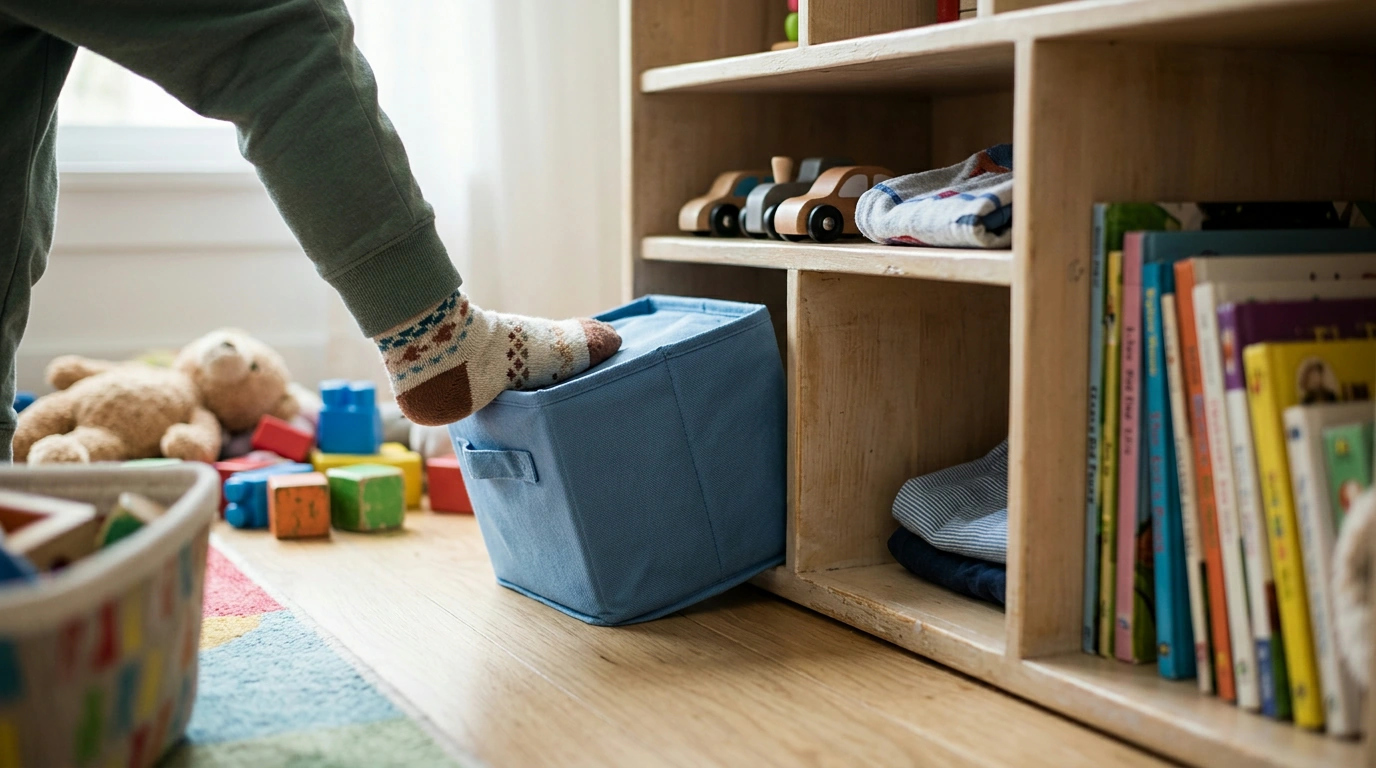
When your child digs in their heels about cleaning, it usually isn’t laziness—it’s overwhelm, unclear expectations, or a power struggle. Our team’s goal is to help you move from arguments to a simple, repeatable routine that actually gets the room reset.
If “clean your room” sounds endless, refusal is a predictable response. Give a short, concrete target: “Let’s make the bed and clear the floor for 10 minutes.” A visible timer helps you stay calm and keeps the task from feeling like a trap.
Choices reduce pushback without handing over control. Try: “Do you want to start with laundry or trash?” or “Do you want music on or quiet?” Keep choices limited and both options acceptable to you.
A quick reset builds momentum and teaches a repeatable sequence. We recommend a 30-minute structure that hits the biggest visual wins first (trash, laundry, items back to zones). You can follow our step-by-step plan here: kids’ room declutter checklist and 30-minute reset.
Make the expectation specific and tied to daily life: “Clothes go in the hamper tonight.” If it doesn’t happen, use a related consequence: “No screen time until the floor is clear,” or “Clean clothes stay in a basket until laundry is put away.” Avoid taking unrelated privileges or turning it into a lecture.
Refusal often disappears when the system is simple. Use open bins for categories (toys, books, sports), a tall hamper with a wide opening, and a small trash can. If clutter is constant, reduce what’s available by rotating toys and keeping only a few “out” at a time.
For younger kids (and many teens), start with 5 minutes side-by-side so they’re not alone with the mess. Then step back: “You do laundry; I’ll do trash.” Next time, you just start the timer and check in at the end.
Switch from “clean your room” to a minimum standard (no food, clear floor path, laundry contained) and let them choose when to meet it within a deadline. Tie privileges they value to that standard, and offer a one-time reset session together to restart the system.









Leave a comment