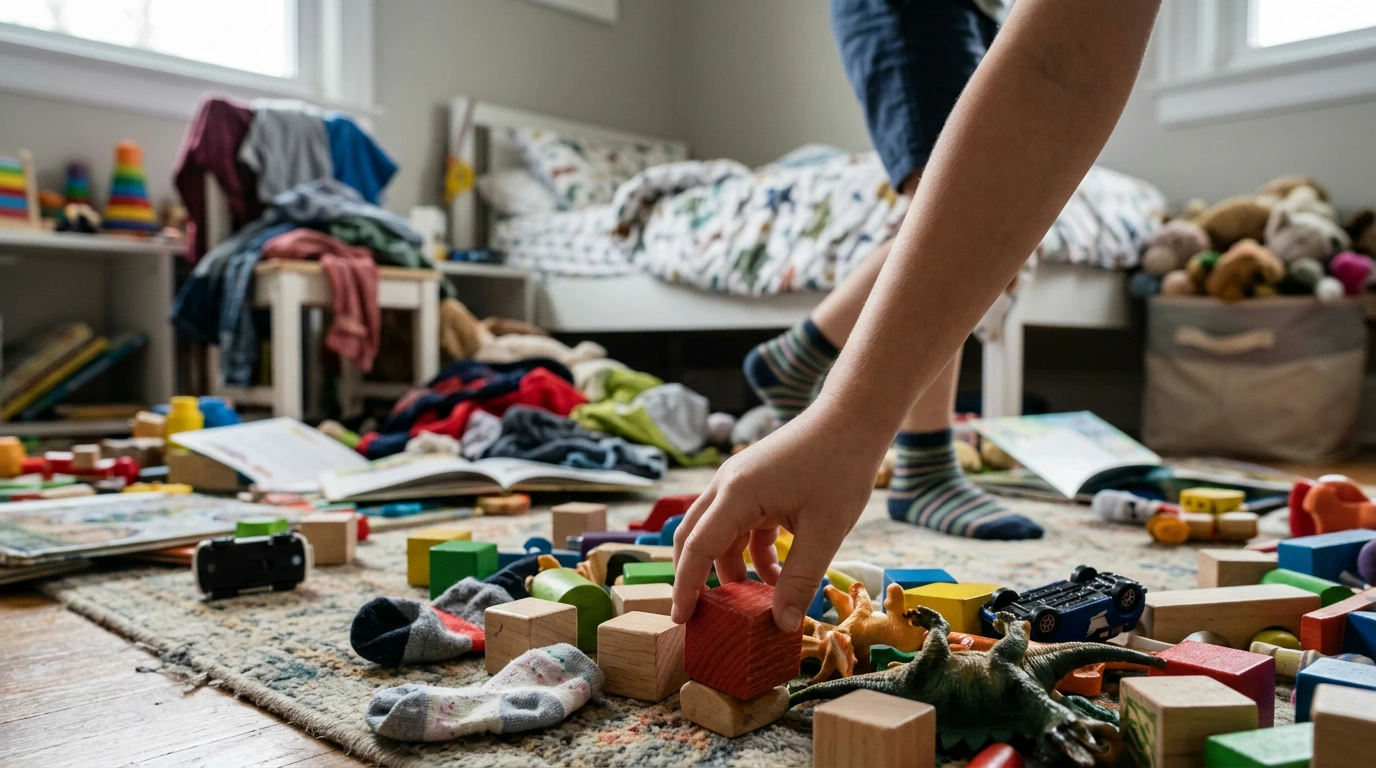
A little mess is normal, and in many homes it’s a sign your child is actually using their space. The goal isn’t a picture-perfect room—it’s a room that’s safe, sanitary, and easy enough to reset regularly. If the clutter is mostly toys, books, and clothes that can be put away in a reasonable time, you can allow some “lived-in” mess while still teaching responsibility.
Our team recommends setting clear non-negotiables so you don’t end up battling every sock on the floor. Keep these boundaries consistent:
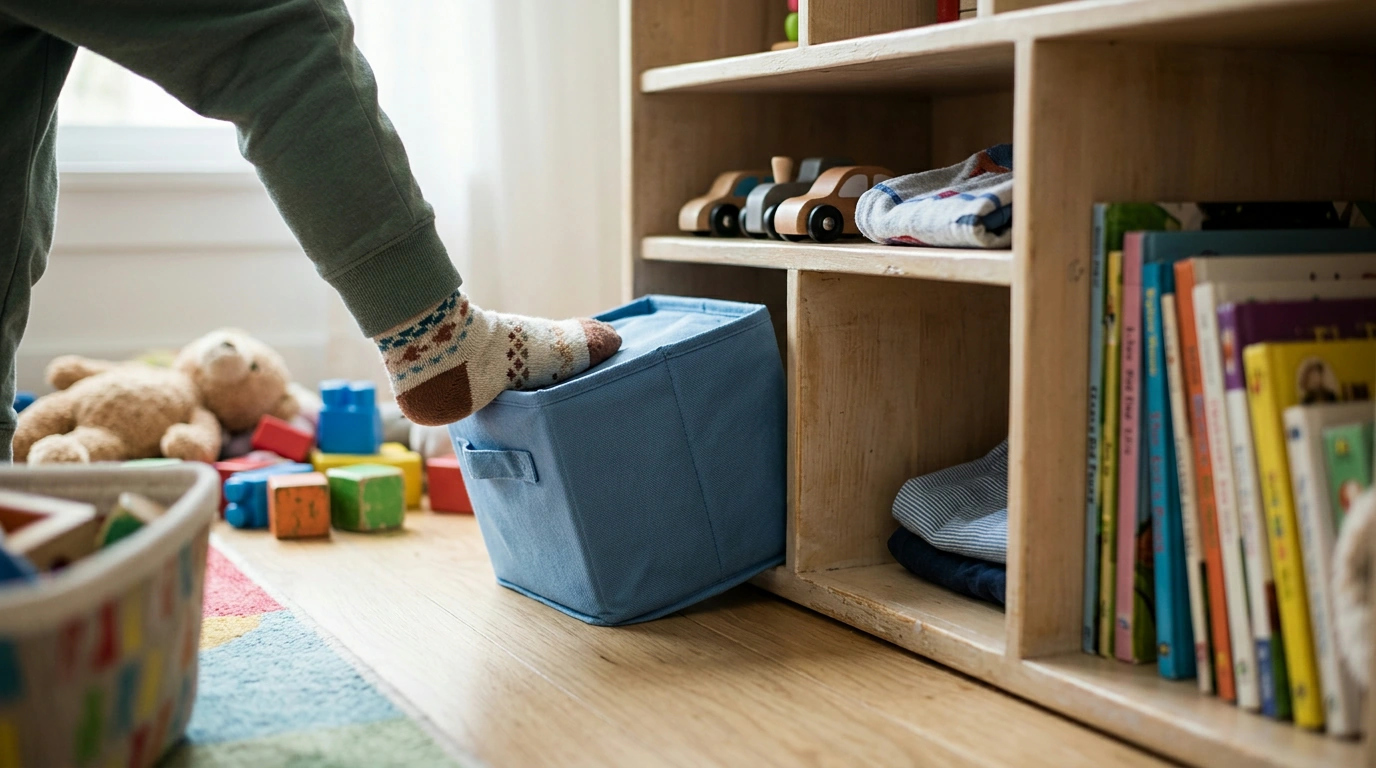
Give your child a simple system that matches how they naturally drop items. We like using an open hamper for dirty laundry, a small catch-all bin for “randoms” (legos, hair ties, action figures), and a few labeled baskets on a low shelf so cleanup doesn’t require perfect folding or sorting. If toys are constantly underfoot, add a lidded bin for quick sweeps and a smaller “keep out” container for fragile builds.
Instead of pushing constant tidying, schedule a predictable reset—often once or twice a week—so your child learns maintenance. Break it into short steps: trash out, laundry in, surfaces cleared, and floor picked up. If you want a ready-to-follow routine, use our guide here: kids’ room declutter checklist and 30-minute reset plan.
If the room stays unusable, items get lost daily, or cleanup regularly ends in overwhelm, it’s time to simplify. Reduce the volume (rotate toys), upgrade storage (bigger bins, fewer categories), and set a realistic baseline your child can meet without help.
Not automatically. It can be normal for kids, but it becomes a concern if it creates safety hazards, attracts pests, hides spoiled food, or prevents your child from sleeping and finding essentials.
Messiness can reflect many things, from busy schedules to developing executive-function skills, and it isn’t a reliable measure of character. What matters most is whether the mess interferes with daily life and whether your child can learn a workable routine.









Leave a comment