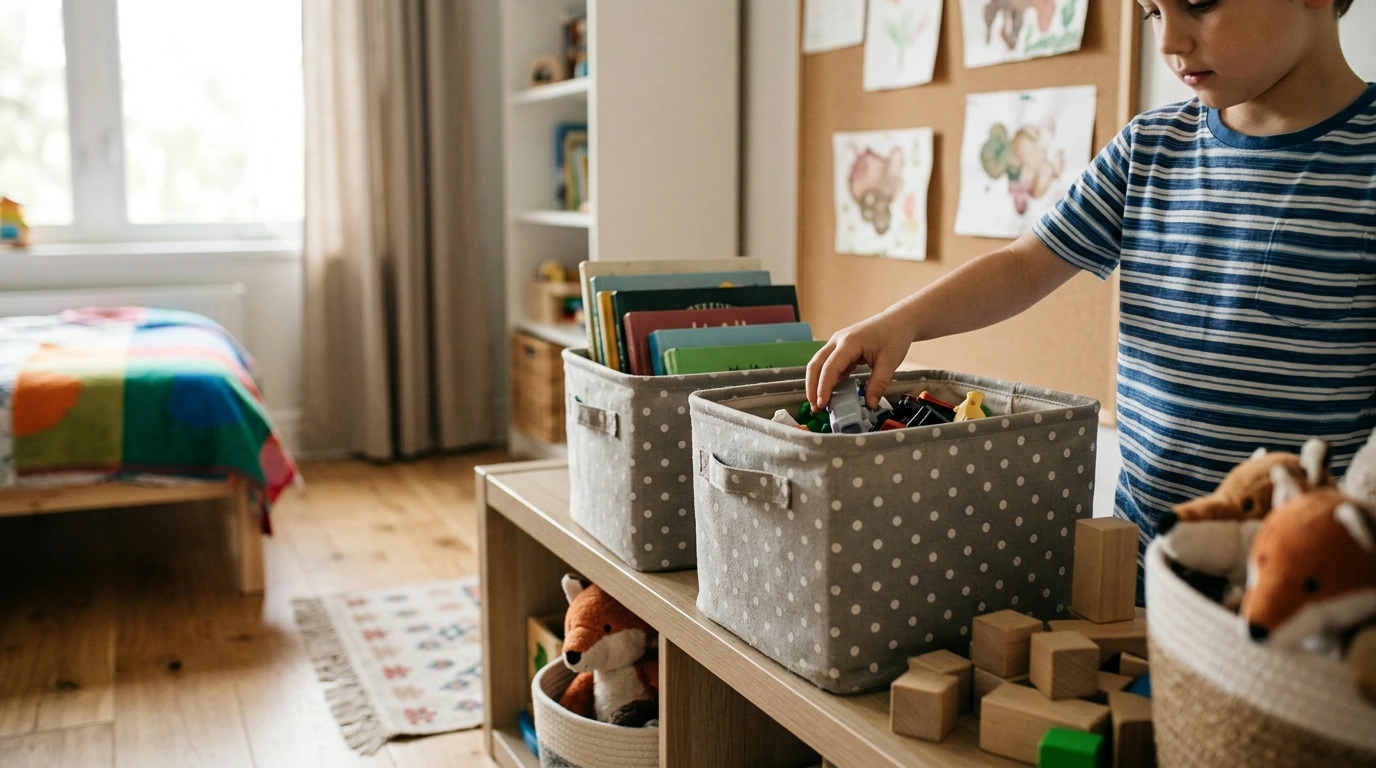
When a kid’s room is packed, everything feels harder: getting dressed, finding homework, even settling down at night. Our team uses a simple approach that keeps decisions quick and prevents the clutter from drifting back. The goal isn’t a perfect showroom—it’s a bedroom where you and your child can reset in minutes.
Set a 10-minute timer and pick up only what’s on the floor and bed: clothes, books, toys, and papers. Put items into four temporary bins or bags labeled: Laundry, Trash/Recycling, Donate, and Elsewhere. This alone restores usable space and gives you momentum.
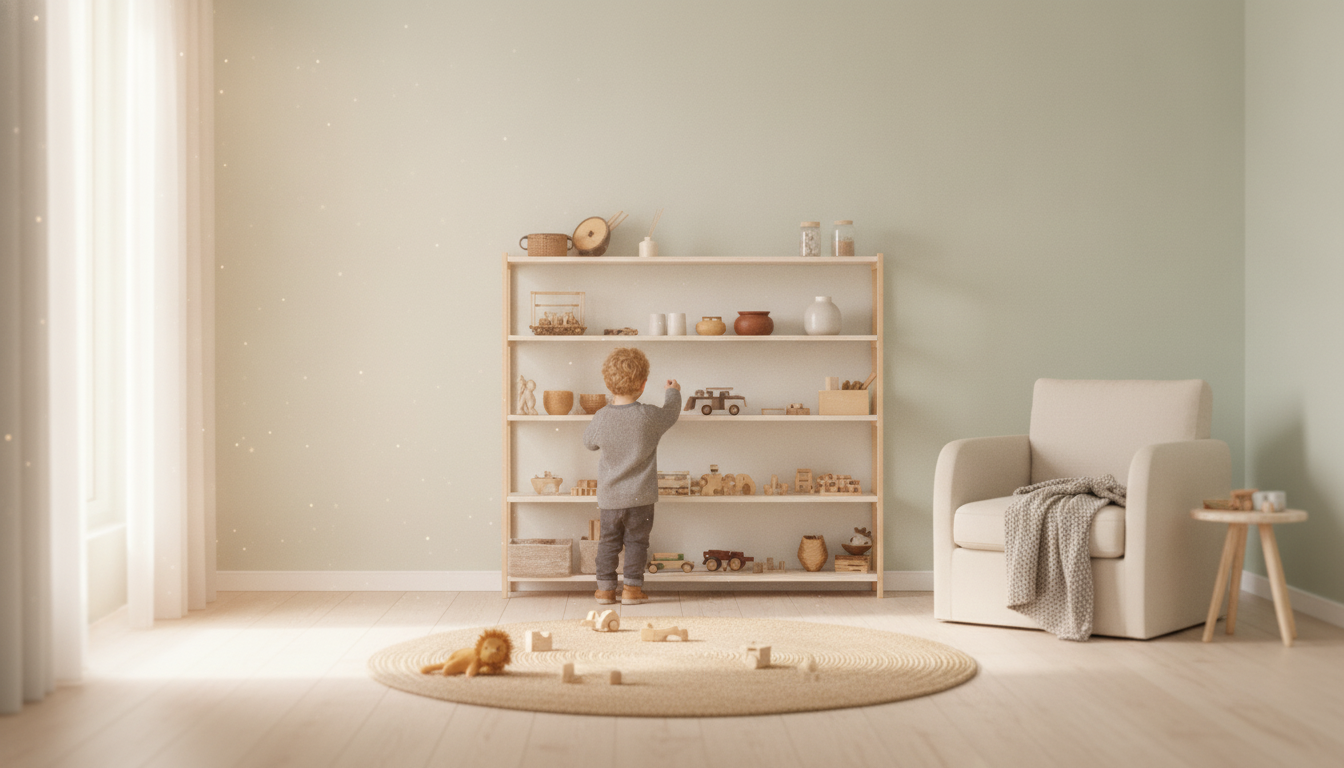
Decluttering sticks when storage matches what your child actually does. Set up three core zones: a “get dressed” zone (hamper, drawers, hooks), a “play” zone (toy storage), and a “learn” zone (books and school supplies). Keep the most-used items between shoulder and knee height so your child can put things away without help.
Choose a few lidded bins for small toys (one category per bin), open baskets for quick toss-in items (stuffies, dress-up), and a slim under-bed bin for bulky sets. A low book ledge or forward-facing shelf makes books easier to see and return than deep bookcases.
Ask: Is it used weekly? Does it have a clear home? Is it still age-appropriate? If the answer is no, move it to Donate, Rotate (store elsewhere), or Recycle. Keep sentimental items in a single memory box; when it’s full, swap rather than add.
Plan a weekly reset: 10 minutes trash and laundry, 10 minutes returning items to zones, 10 minutes putting away toys by bin. For a step-by-step checklist and a quick reset plan you can follow anytime, visit our full guide: https://operena.com/guide-kids-room-declutter-checklist-30-min-reset-plan/.
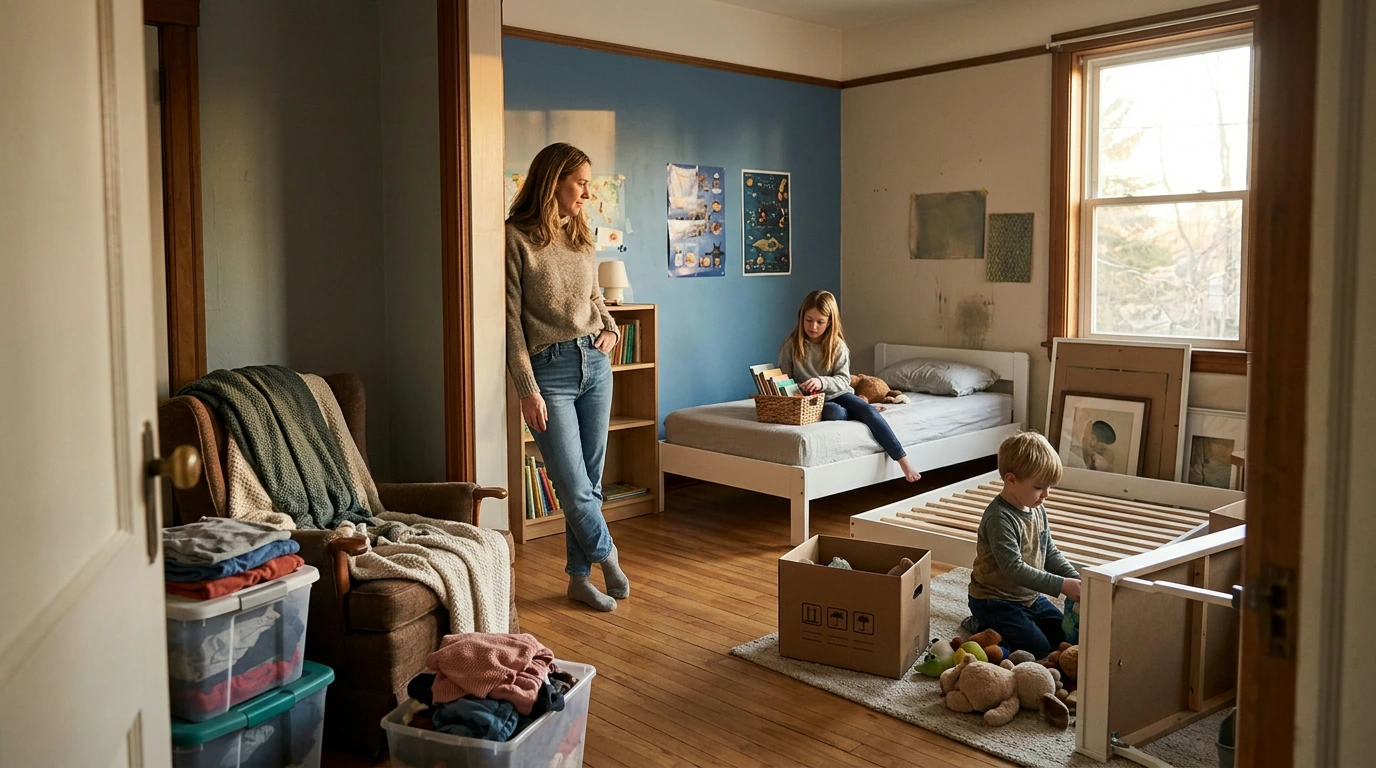
There isn’t one required age; it depends on your home, your kids’ comfort, and family routines. Many families choose separate bedrooms when sleep schedules, privacy needs, or homework time start conflicting in a shared space.









Leave a comment